
Concrete Finishes
Exposed Aggregate vs Stamped Concrete: Which Finish Is Right for Your BC Property?
When homeowners across the Lower Mainland plan a new driveway, patio, or walkway, two decorative finishes come up again and again: exposed aggregate and stamped concrete. Both turn a plain slab into a feature, both last for decades when they are built right, and both suit BC's climate. The difference is in the look, the feel underfoot, and the way each one fits your property.
Over the years we have installed both finishes on residential and commercial properties throughout Metro Vancouver and the North Shore. Each finish performs well when installed on a properly prepared base, but the right choice depends on how you plan to use the space.
What Is Exposed Aggregate Concrete?
Exposed aggregate is concrete with its top layer of cement paste washed away to reveal the stones, pebbles, and sand inside. Instead of a smooth grey surface, you get a textured, natural finish made up of the aggregate itself. The look is earthy and understated, and because the texture comes from real stone, it ages well and hides everyday wear.
It is one of the most durable decorative finishes available, and its natural grip makes it a practical choice for sloped or wet areas.
What Is Stamped Concrete?
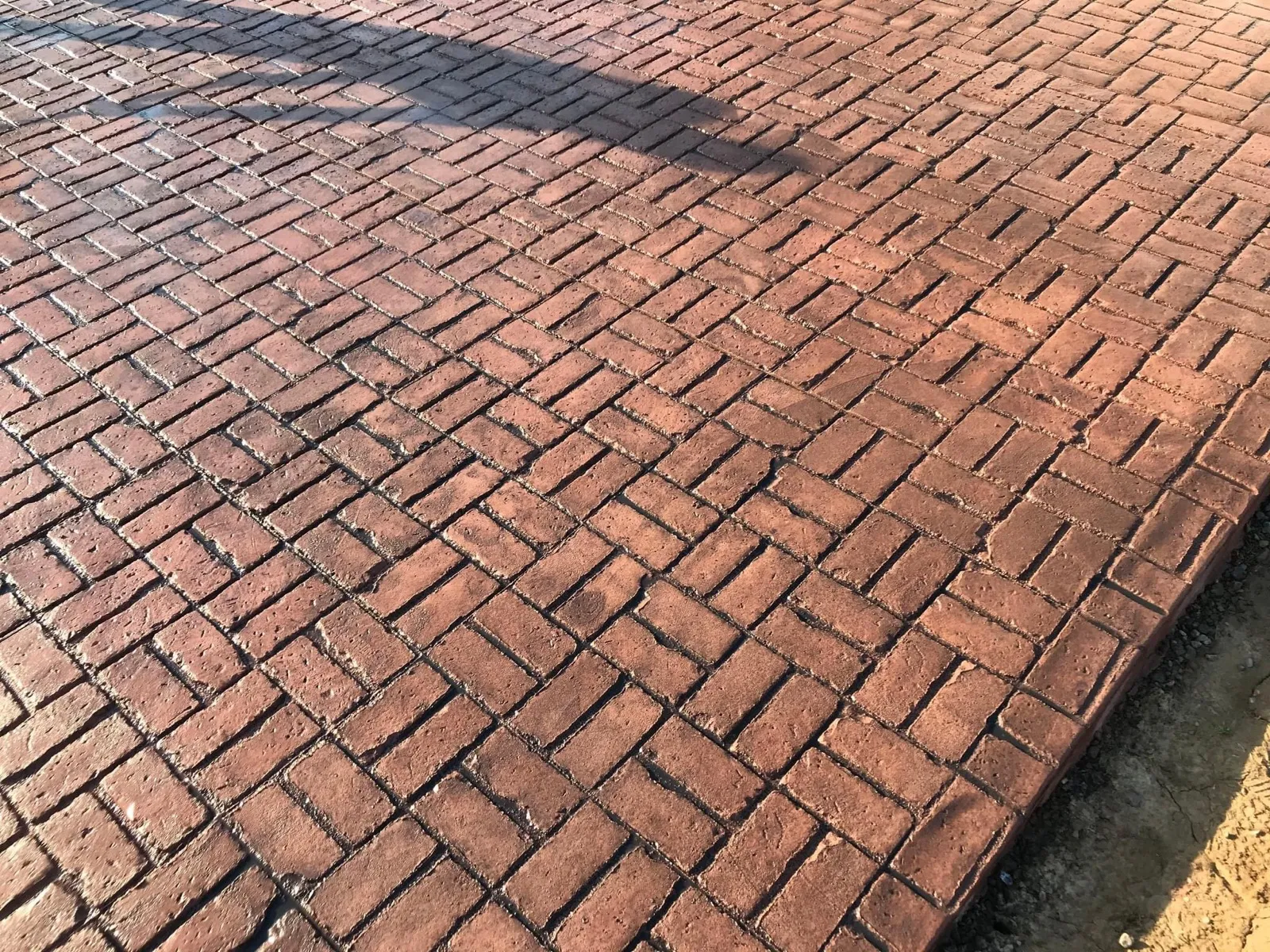
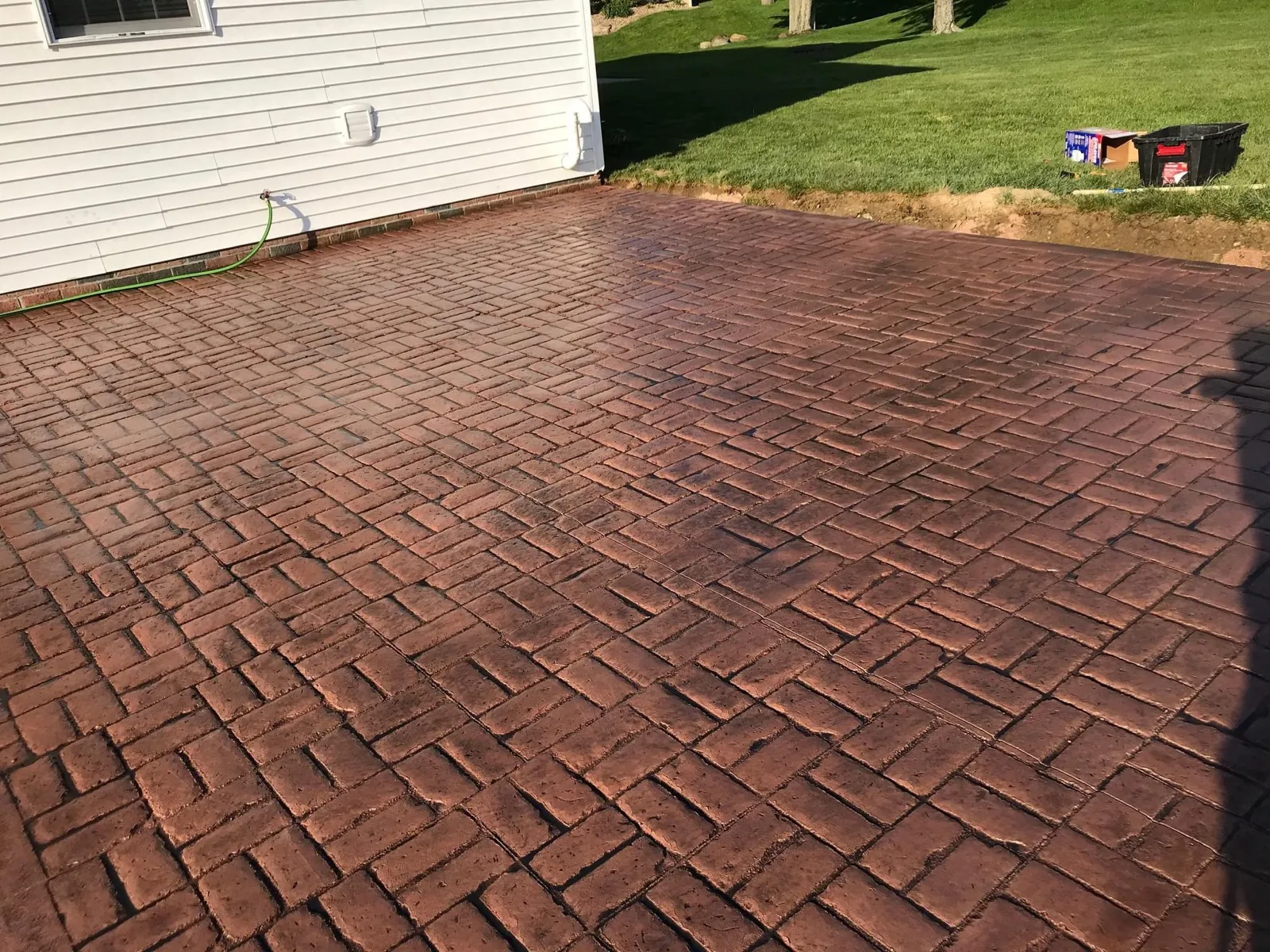
Stamped concrete is poured, coloured, then imprinted with textured mats while it is still workable, so the finished slab mimics slate, flagstone, brick, cobblestone, or wood. With integral colour, accent stains, and a wide range of patterns, stamped concrete gives you the most design control of any concrete finish. It is the closest concrete gets to high-end natural stone, at a fraction of the cost of the real thing.
The trade-off is a smoother surface, so it needs the right sealer and finish to stay safe underfoot in the rain.
Exposed Aggregate vs Stamped Concrete at a Glance
| Factor | Exposed Aggregate | Stamped Concrete |
|---|---|---|
| Look | Natural, textured, understated | Mimics stone, slate, brick, or wood |
| Design variety | Limited to aggregate type and colour | Wide range of patterns and colours |
| Slip resistance | High, naturally textured | Lower when wet, depends on sealer |
| Durability | Excellent, hides wear well | Excellent, can show wear and fading |
| Maintenance | Low, periodic resealing | Periodic resealing, more attention to colour |
| Repairs | Blends easily | Pattern and colour matching is harder |
| Best for | Driveways, slopes, pool decks, high-traffic | Patios, feature walkways, design-led spaces |
Appearance and Design Options
This is where the two finishes split most clearly. Exposed aggregate gives you a consistent, natural texture, with variation coming from the size and colour of the stone. It reads as quiet and timeless, and it pairs well with both modern and traditional homes.
Stamped concrete is the choice when you want a specific look. If you are after the appearance of slate around a pool, flagstone on a patio, or cobblestone on a feature walkway, stamping delivers it. You also get far more control over colour, including borders and accent bands that frame the space. You can see the range on our stamped and decorative concrete page.
Durability and How Each Holds Up in BC Weather
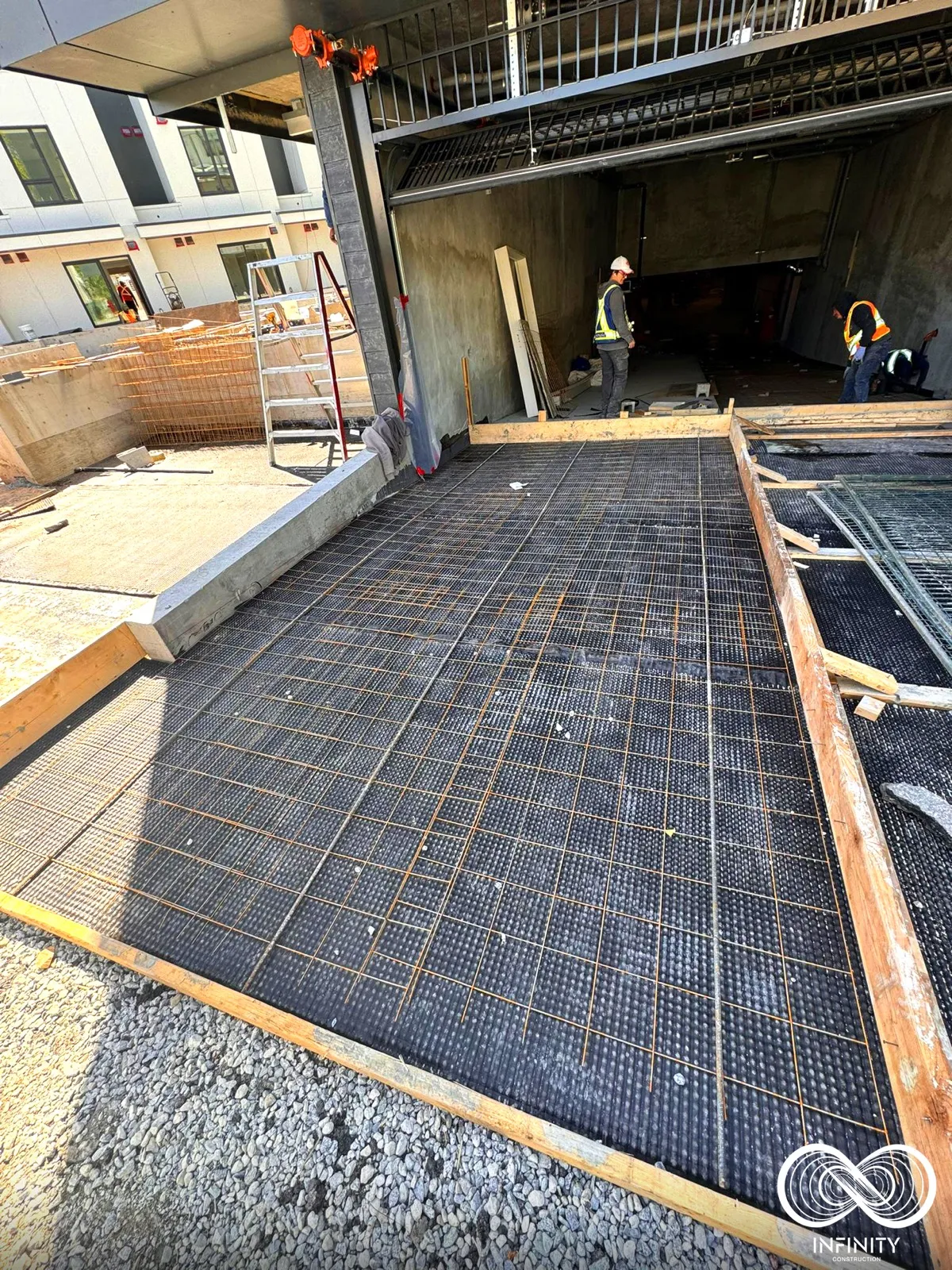
Both finishes are built on the same foundation: poured concrete. With proper base preparation, reinforcement, control joints, and sealing, both hold up to BC's freeze-thaw cycles and wet winters for decades. Air entrainment matters here, and it is one of the mix properties the Cement Association of Canada points to for concrete exposed to freezing and thawing.
Exposed aggregate has a slight edge in hiding wear, because its texture disguises minor surface changes over time. Stamped concrete can show wear at high-traffic points and its colour can fade if the sealer is neglected. In both cases, the quality of the original pour and the upkeep of the sealer matter far more than the finish you choose.
Slip Resistance
On the North Shore and across the Lower Mainland, where rain is a fact of life, slip resistance is worth thinking about. Exposed aggregate is naturally textured, so it grips well even when wet, which makes it a strong choice for sloped driveways, steps, and pool surrounds.
Stamped concrete is smoother by nature. With an anti-slip additive in the sealer and the right finish it performs well, though it needs that attention to stay safe in wet weather. On the steep driveways we pour in West Vancouver, grip usually decides the finish before anything else does.
Maintenance and Sealing
Both finishes ask for the same core care: reseal every few years to protect the surface and keep the colour looking fresh. Exposed aggregate is more forgiving between sealings because its look does not depend on a printed colour. Stamped concrete rewards staying on top of resealing, since the sealer is what keeps the pattern and tones crisp.
Cost Considerations
Exposed aggregate and stamped concrete sit in a similar range, and both cost more than a plain broom-finished slab because of the extra material and labour involved. The final number depends on the size of the project, the complexity of the pattern or aggregate, site access, and prep work. Rather than quote a standard figure, we visit your property, look at the site, and give you a written quotation so you know what each part of the project costs.
Which Finish Is Right for You?
Choose exposed aggregate if you want a natural, low-key look, strong slip resistance on a slope or around a pool, and a finish that hides wear. It is a favourite for driveways and high-traffic surfaces.
Choose stamped concrete if you want a designed look, the appearance of natural stone or brick, and full control over colour and pattern. It shines on patios and feature walkways where the surface is part of the design.
Many properties use both, with exposed aggregate where grip and durability matter most and stamped concrete where the look leads. The finish that fits your property depends on how you use the space, and that is a conversation worth having on site.
Whichever finish you choose, what sits under it decides how long it lasts. We walk through excavation, compaction, drainage, reinforcement, mix, curing, and sealing on every project. See how that plays out on the North Shore.
Common Questions
Frequently Asked Questions
The two finishes sit in a similar price range, and both cost more than a plain concrete slab. Exposed aggregate can come in slightly lower on simple projects, while stamped concrete cost rises with pattern complexity and custom colour work. The biggest cost drivers are project size, site access, and prep, not the finish alone. We provide a written quotation after a site visit so you see what your project costs.
Both last for decades when they are built on proper base prep, reinforcement, and sealing. Exposed aggregate hides wear a little better over time, while stamped concrete depends more on keeping its sealer fresh to protect the colour and pattern. The quality of the original pour matters more to longevity than the finish you pick.
Exposed aggregate is a popular driveway choice in BC because its natural texture grips well on slopes and in the rain and it hides everyday wear. Stamped concrete works on driveways too, especially when you want a designed look, as long as it is finished with an anti-slip sealer for wet weather.