
Driveways
How Long Does a Concrete Driveway Last in Vancouver's Climate?
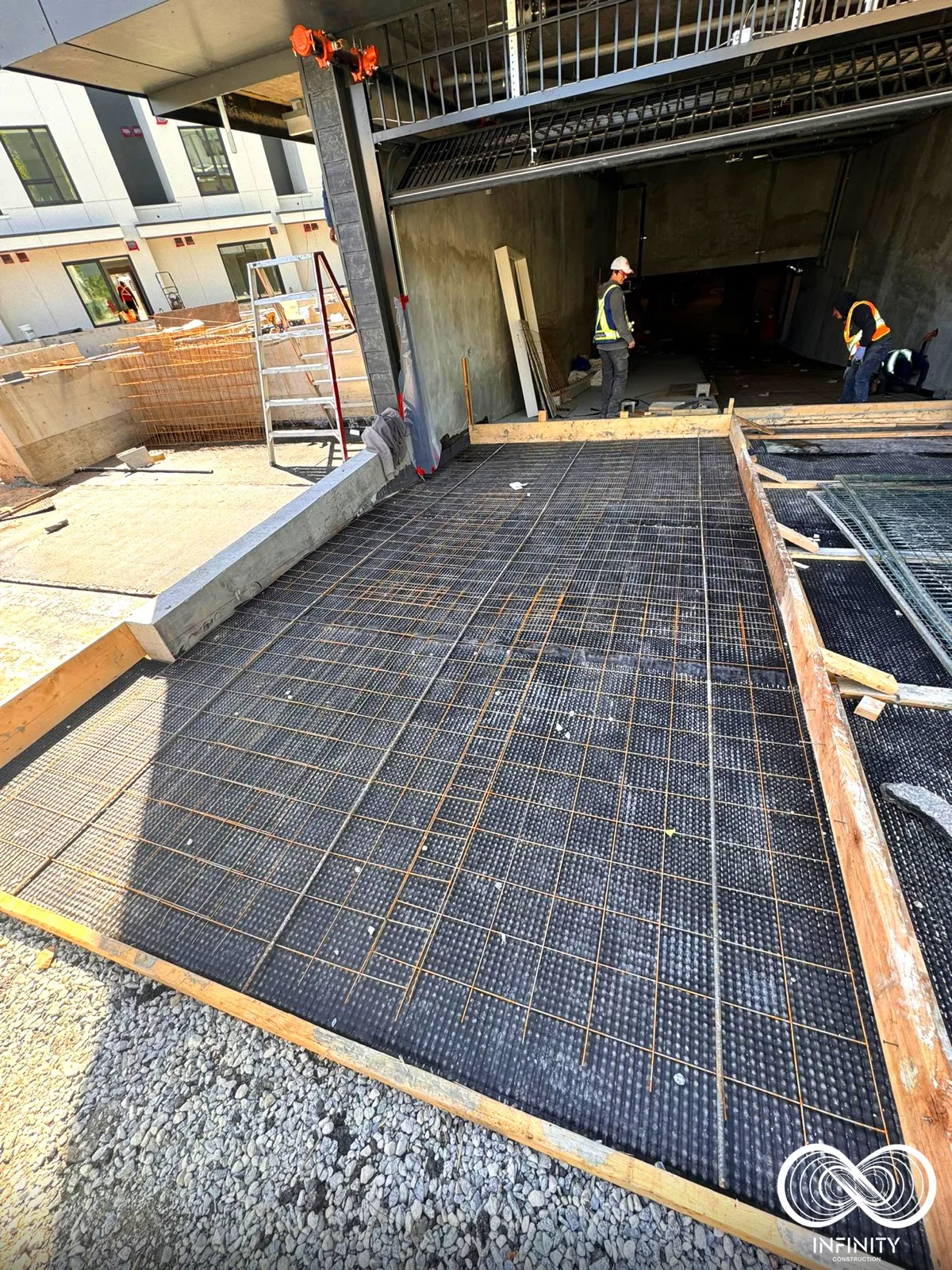
A well-built concrete driveway can last for decades, often longer than the owner expects. The difference between a slab that holds up for thirty years and one that cracks in five is rarely the concrete itself, which is mostly the same mix from yard to yard. It is what goes in before and after the pour. Here is what decides how long concrete lasts in the Lower Mainland, and the simple steps that add years to any driveway.
What shortens a concrete driveway's life
- Poor drainage. Water that pools under or beside the slab is the number one enemy, especially through freeze-thaw.
- A weak base. Skipped gravel or poor compaction lets the slab settle and crack.
- Too thin, or no reinforcement. A slab that cannot carry its loads fails early.
- No control joints. Concrete needs joints in the right places to control where it cracks.
- Never sealing. An unsealed surface takes on water and road salt over the years.
- Tree roots and heavy loads. Large roots nearby and repeated heavy vehicles can crack a slab that was not built for them.
What makes concrete last
Longevity is built in before the pour, not added afterward. No amount of sealing later fixes a slab poured too thin on an uncompacted base. A compacted gravel base, proper drainage, correct slab thickness, reinforcement, and control joints are what carry a driveway past year ten. The American Concrete Institute sets the placement and curing standards professional crews follow for exactly this reason. Curing matters too: concrete that is kept moist as it sets reaches full strength and resists cracking.
Lifespan also depends on the finish. A plain, sealed concrete driveway built on a good base commonly lasts thirty years or more. Stamped and decorative surfaces last just as long structurally, and the colour and pattern stay sharp longer when they are resealed on schedule. Garage floors and interior slabs, kept out of the weather, often outlast an exterior driveway. Asphalt, by comparison, usually needs replacing in roughly half the time, with resealing every few years in between.
Vancouver's climate is actually easier on concrete than a prairie winter, but it has its own test: constant rain and repeated freeze-thaw cycles near the coast. Water is the common thread. A slab that sheds water and is sealed against it will outlast one that sits wet, no matter how good the concrete was on day one. A driveway in a shaded, poorly drained spot ages faster than the same slab in the sun with good run-off. If yours sits in a low spot, improving the grade and drainage is the single best thing you can do to extend its life.
Think of the upkeep as a simple yearly rhythm. Each spring, walk the driveway and look for new cracks, spots where water pools, and areas where the surface feels rough or dusty. Fill any small cracks while they are still hairline, clear the drainage paths, and check whether water still beads on the surface. When it stops beading, it is time to reseal. Fifteen minutes of looking once a year catches the problems that, left alone, turn into a full replacement a decade early.
Simple maintenance that adds years
- Reseal every couple of years to keep water and salt out
- Keep drainage clear so water moves away from the slab
- Regrade or add a drain if water consistently pools against the edge after rain
- Fill small cracks early before water gets in and freezes
- Reseal a decorative or stamped finish a little more often to protect the colour
- Avoid de-icing salts where you can, since they speed up surface wear
- Rinse off oil and chemical spills before they soak in and stain
- Clear snow with a plastic shovel so you do not chip or scratch the surface
Built for year ten
The honest measure of a driveway is not how it looks the week it is poured, but how it holds up at year ten. Plenty of driveways look flawless at year one and are crumbling by year eight. That is a function of the base, the pour, and the finish working together, and of maintenance that keeps water out over the years. It is also worth knowing when a driveway is near the end of its life: widespread cracking, sections that have sunk or heaved, surface crumbling that keeps spreading, and repairs that no longer hold. One or two of those on an old slab is usually the point where a replacement on a corrected base is the better spend, since patching a failing driveway year after year costs more in the end. A contractor who builds for the climate rather than the lowest bid is what gets you there, and it is why the base and drainage deserve as much attention as the finish you can see. See how we approach concrete driveways built for the Lower Mainland.
Common Questions
Frequently Asked Questions
A properly built and maintained concrete driveway commonly lasts several decades in Vancouver's climate, and often thirty years or more for a plain, sealed slab on a good base. Drainage, base prep, and sealing are what decide the number far more than the concrete itself.
Sealing keeps water and road salt out of the surface, which is exactly what causes freeze-thaw damage and surface wear. On a decorative or stamped finish, it also keeps the colour from fading. It is one of the cheapest ways to add years to a driveway, and it keeps the surface looking newer in between. The first seal should go on once the concrete has fully cured, usually about a month after the pour.
Early cracking usually comes from a weak base, poor drainage, a slab that is too thin, or missing control joints, not from the concrete itself. Those are workmanship issues, which is why who builds the driveway matters as much as the mix. The same materials last thirty years or five depending entirely on the hands that place them.