
Seasonal Concrete
Can You Pour Concrete in Winter in Vancouver?
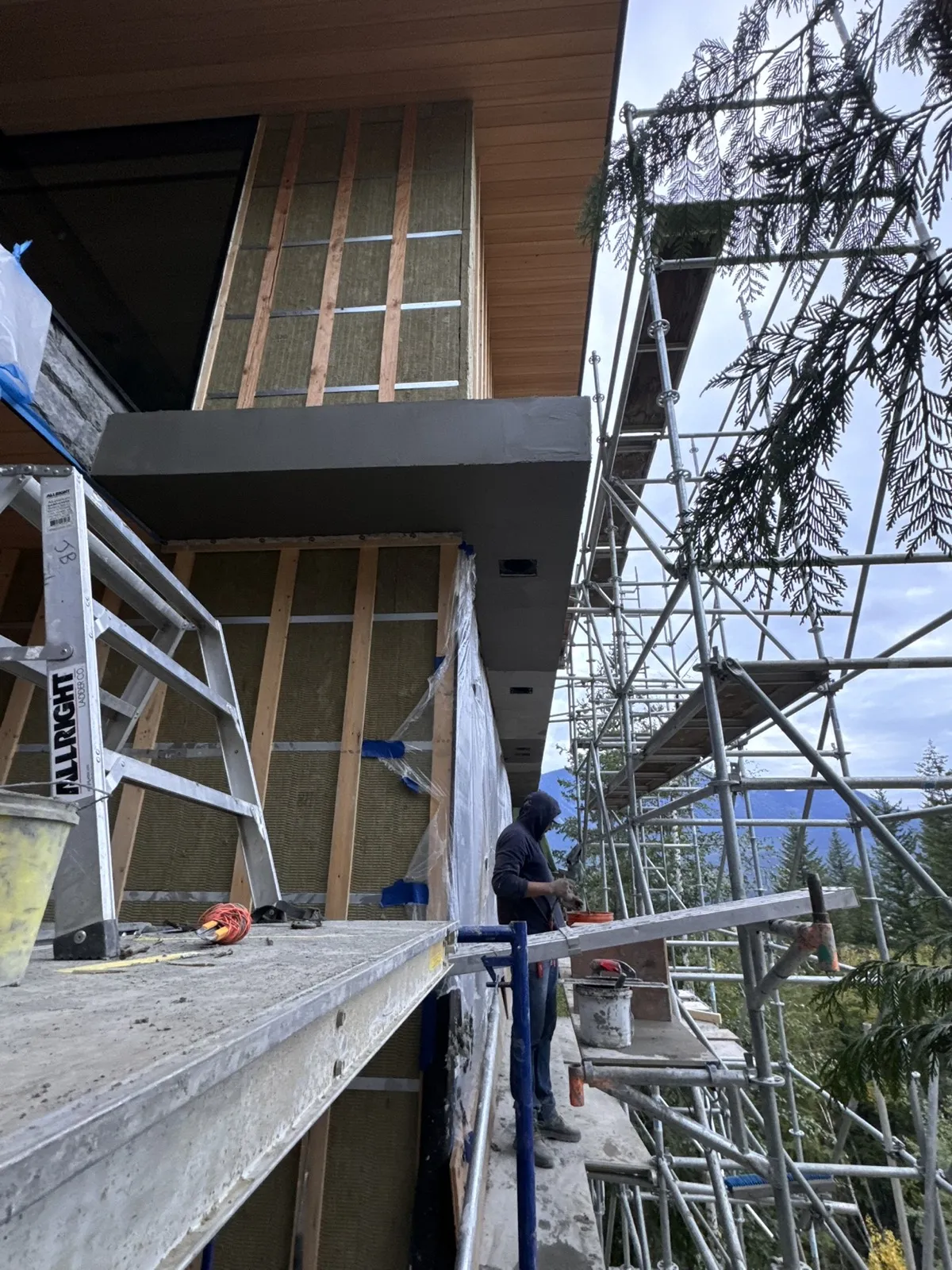
Yes, concrete can be poured in winter in Vancouver, but it takes the right conditions and the right practices. The Lower Mainland rarely sees deep cold, which works in our favour, but temperature, rain, and curing all need managing for a sound pour. Get them right and a winter pour is every bit as durable as a summer one. Here is what to know before scheduling a fall or winter project, and the questions to ask a contractor who says they can pour in the cold.
The temperature limits for a sound pour
Concrete needs warmth to cure. Warmth drives the reaction that turns a wet mix into a hard, durable slab. As a general rule, fresh concrete should be protected when temperatures drop toward or below 5°C, and it should not be placed on frozen ground. Vancouver winters usually stay above that line, which is why concrete work continues here through much of the year. A snap of harder frost is the exception, and it is the kind of day a crew simply works around. The risk is not a single cold day but concrete freezing before it has gained enough strength, which usually takes a few days of protection in cool weather. The American Concrete Institute sets the cold-weather concreting practices professional crews follow.
The reason cold matters is curing. Concrete gains most of its strength in the first days after a pour, through a chemical reaction that slows as temperatures fall and nearly stops near freezing. If fresh concrete freezes before it has gained enough strength, the water inside expands and weakens it for good. The whole goal of cold-weather work is to keep the slab warm enough, long enough, to get past that vulnerable window. Once concrete reaches a safe strength, usually within a few days, normal winter temperatures no longer threaten it.
Cold-weather practices that keep a pour sound
- Insulating blankets. Curing blankets hold the heat the concrete generates as it sets.
- Accelerators. Admixtures that speed early strength gain, so the slab is protected sooner.
- Warm mix and timing. Pouring earlier in the day and using heated water or materials where needed.
- Protecting the base. Never placing on frozen or waterlogged ground.
- Curing time. Leaving protection in place longer, since strength gain is slower in the cold.
Rain is the bigger Vancouver factor
More often than cold, it is rain that sets the schedule here. Heavy rain during placement or before the surface has set can weaken the finish. A good crew watches the forecast, protects the pour, and reschedules when the weather will not cooperate rather than forcing it. A pour pushed through heavy rain can finish dusty, pitted, or weak at the surface, and that cannot be undone.
In the Lower Mainland, that makes fall a good window for most concrete work: temperatures are mild and the heaviest rain has often not set in. Deep winter is workable but slower, since every pour needs protection and curing takes longer. If a project is not urgent, planning it for a drier, milder stretch is the easiest way to avoid delays and get the best finish. For time-sensitive work like repairs before winter, the cold is manageable with the right crew.
It also helps to match the job to the season. Interior work, like a garage floor or a basement slab, is largely weather-proof and a good choice for winter. Repairs that stop water getting into a slab are worth doing before the freeze-thaw season rather than after. Large exterior pours with a decorative finish are the ones most worth timing for a drier, milder window, since the finish is where rain and cold show up first. A reputable contractor will tell you plainly which bucket your project falls into. There is rarely a good reason to rush a large decorative pour into a wet week when waiting a fortnight gets a better result.
When to go ahead and when to wait
A dry stretch with temperatures above freezing is fine for most work with normal cold-weather care, and that describes much of a Vancouver winter. A hard frost, frozen ground, or a wet forecast is a reason to wait a few days. The cost of waiting a few days is far lower than the cost of a pour that did not cure properly. If a contractor is pouring in the cold, it is fair to ask how they will protect and cure the slab, and a good one will have a clear answer. Vague answers about cold-weather pours are a reason to get a second opinion. If you are planning a project for the colder months, our team can advise on timing across the full range of concrete services.
Common Questions
Frequently Asked Questions
Concrete can be poured in cold weather with the right practices: insulating blankets, accelerators, heated materials where needed, and protecting it from freezing until it hardens. It should not be placed on frozen ground, and it needs to stay covered until it has gained enough early strength to resist it. Heated blankets and enclosures make that possible even on cold days.
Fresh concrete needs protection as temperatures approach or fall below 5°C. Vancouver winters usually stay mild enough for work to continue with normal cold-weather care, which is why concrete work does not simply stop here in the colder months.
Light rain can be managed, but heavy rain during or just after placement can weaken the surface and leave it dusty or pitted once it dries. Crews watch the forecast and protect or reschedule the pour, since a finish ruined by rain cannot be fixed after the fact. Once the surface has set and been protected, normal rain does little harm.