
Concrete Finishes
Stamped Concrete in Vancouver: Patterns, Colours, and Costs
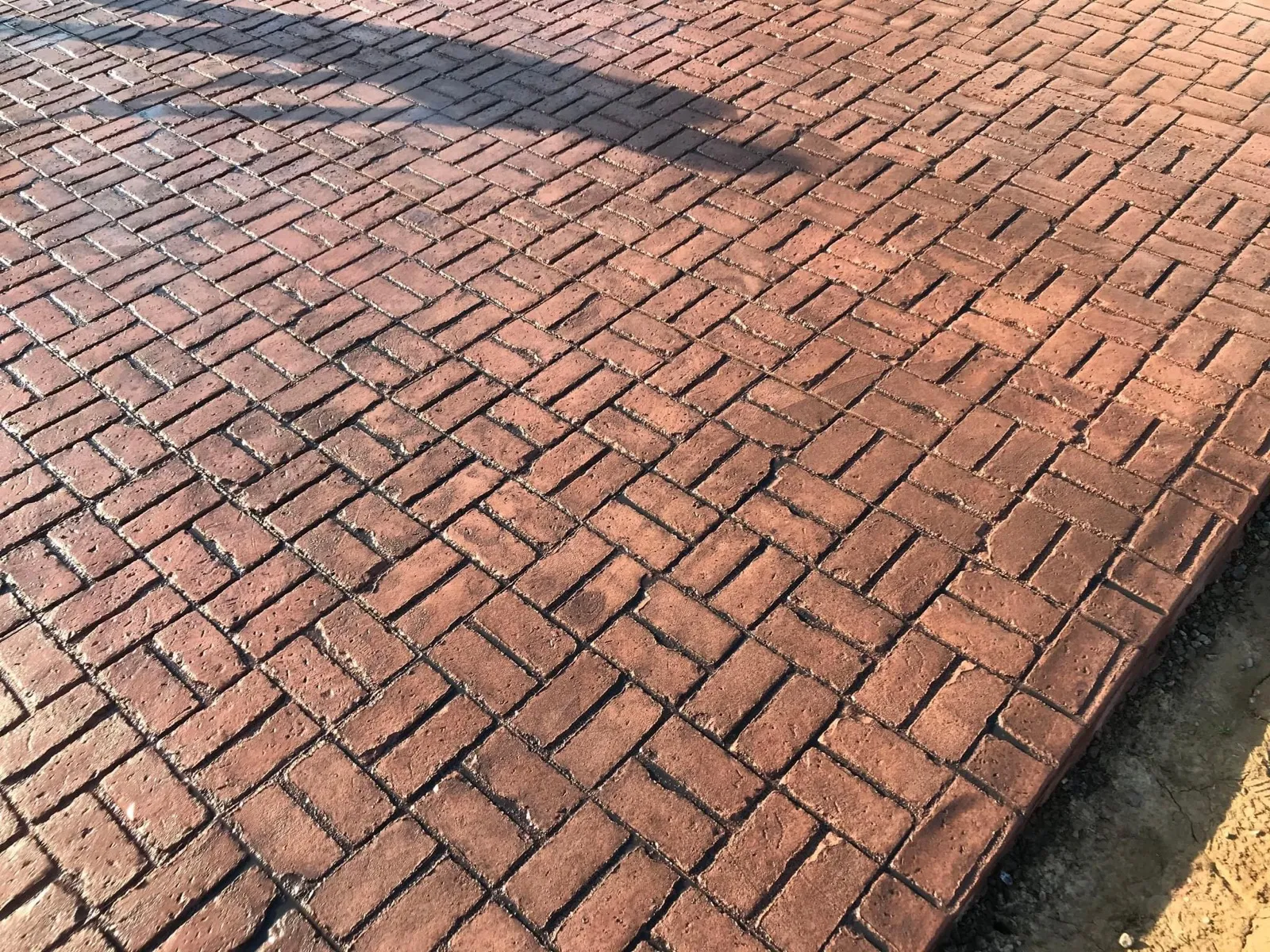
Stamped concrete gives a driveway, patio, or walkway the look of brick, slate, or natural stone in a single poured surface. It has become one of the most popular finishes for Vancouver homes because it adds character without the joints and shifting of pavers. Here is how it works, what patterns and colours are available, what it costs more for, and how it holds up in our wet, freeze-thaw climate. Infinity offers more than 30 stamping patterns, so there is a texture to suit almost any home.
Popular stamped patterns
- Brick. Classic running-bond or herringbone, warm and traditional.
- Slate and stone. Irregular, natural-looking texture that suits modern and West Coast homes.
- Wood plank. A newer look that mimics timber for patios and pool decks.
Colour is added two ways: an integral colour mixed through the concrete, and a release or accent colour applied at stamping for depth. The two together are what make a stamped surface read as real stone rather than painted concrete.
The look comes from the process. A crew pours and levels the slab, works in the colour, then presses rubber stamping mats into the concrete while it is still workable. Timing is everything: stamp too early and the pattern smears, too late and it will not take. That short window is why stamped concrete rewards an experienced crew. The surface is then sealed, which locks in the colour and protects it from water.
Choosing a pattern comes down to the look you want and where it goes. Ashlar slate and seamless-stone textures read as natural stone and suit patios and pool decks. Brick and cobblestone patterns give driveways and walkways a defined, traditional look. For colour, earth tones hide dust and the odd tire mark better than very light or very dark shades, which is worth keeping in mind for a driveway that sees daily traffic. A sample board or a small test pour is the best way to see how a colour will actually look once it is sealed and dry.
Where stamped concrete works best
Driveways, patios, walkways, and pool surrounds are the common uses. Front entries and courtyards are popular too, where the pattern makes a strong first impression. For driveways, a sealed stamped surface stands up to vehicle traffic. For patios and walkways, the texture adds grip. If you want the decorative look on an interior or garage floor, a polished concrete floor is usually the better fit.
Compared with pavers, stamped concrete has no joints for weeds or ants and will not shift out of line, though a cracked section is harder to fix than lifting a single paver. Compared with plain concrete, it costs more but adds real curb appeal. Most homeowners choose it for the look of natural stone at a lower price, in a single poured surface that is easy to clean. It is also faster to install than laying pavers or natural stone, since it is one continuous pour rather than hundreds of separate pieces.
How it holds up in Vancouver
Vancouver's rain and freeze-thaw cycles are hard on any outdoor surface. Stamped concrete handles them well when it is placed on a proper base, has control joints in the right places, and is resealed on schedule. Sealing every couple of years keeps the colour rich and water out of the surface. Skipping it is the most common reason a stamped surface looks tired after a few winters. The American Concrete Institute publishes the standards professional crews follow for placing and curing decorative concrete.
The weak point in our climate is water, not colour. Where a stamped surface fails early, it is almost always because the base was poor, control joints were missing, or the sealer was never renewed. Get those three right and a stamped driveway holds its look for years through heavy rain and freeze-thaw.
Day-to-day care is light. Rinse the surface and sweep it clear, wash it once or twice a year, and clear snow with a plastic shovel rather than a metal blade that can scratch the sealer. Avoid de-icing salts where you can, since they are hard on any concrete surface. Reseal when water stops beading on the top, usually every two to three years here. Done on schedule, that upkeep is minutes a season and keeps the finish looking new for decades.
What stamped costs more for
Stamped concrete costs more than a plain broom finish because of the extra materials, the stamps, colour, release, and sealer, and the skilled labour to place and texture it before the concrete sets. The pattern and number of colours you choose move the price. A single colour with a simple pattern is the most affordable, while multiple colours and intricate stamps cost more. A written quote after a site visit is the only way to get an accurate figure. As a planning range, stamped concrete in the Lower Mainland runs about $16 to $25 per square foot, compared with roughly $12 to $18 for a standard broom finish. That gap pays for the pattern, the colour, and the hand-work the finish takes, and it grows with the size and shape of the area.
Common Questions
Frequently Asked Questions
Stamped concrete can crack if the base is poor or control joints are missing, the same as any concrete. Placed correctly on a solid base with proper joints and reinforcement, it holds up for decades, and hairline cracks can usually be repaired and resealed rather than replaced. Control joints are placed on purpose so any movement shows up along a planned line rather than as a random crack.
Stamped surfaces have texture that adds grip, and a non-slip additive can be mixed into the sealer for driveways and pool decks where water is common. For a steep driveway, a deeper texture pattern adds extra traction. On flat patios, a lighter texture is fine and easier to keep clean.
Resealing every one or two years in Vancouver's climate keeps the colour strong and protects the surface from rain and freeze-thaw. A quick rinse and the occasional wash is all the day-to-day care it needs.